
Every clutch wears out in the end, so if yours is slipping, you haven't done anything wrong. Here's how to tell, what's causing it, whether it's safe to keep driving and what putting it right involves.
On this page
01What a slipping clutch actually is
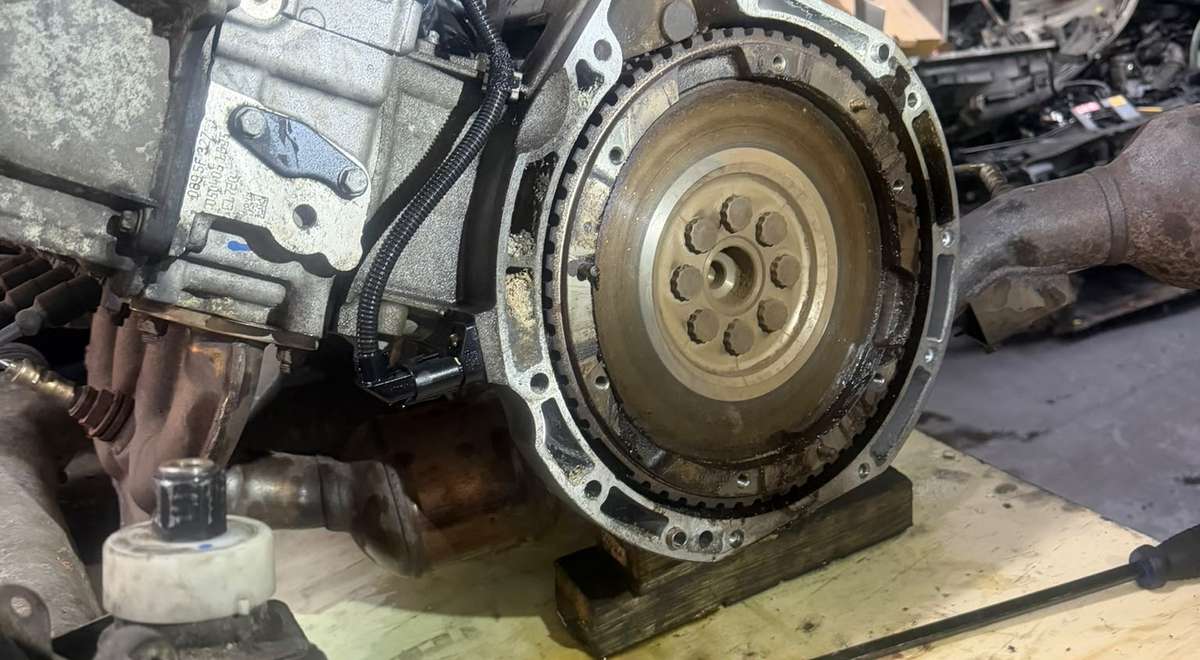
Your clutch connects the engine to the gearbox. When you lift your foot off the pedal, the pressure plate clamps the clutch plate, a friction disc a bit like a brake pad, against the flywheel on the back of the engine, and they turn together.
When the clutch plate wears thin, or something stops it gripping, it spins slightly against the flywheel instead of locking to it. That's the slip. The engine is working hard, but some of its power turns into heat at the clutch instead of moving the car.
02The signs of a slipping clutch
Slipping usually starts gently and gets worse over weeks or months. Look out for these.
The revs rise, the car doesn't
The rev counter jumps when you accelerate, but your speed barely changes. This is the clearest sign of all.
It's worse in higher gears
Fourth, fifth and sixth put the most load on the clutch, so slipping usually shows up there first.
It struggles uphill or loaded
Hills, a full car or a heavy boot make it slip more. The car feels like it runs out of pull.
A burning smell
A sharp, acrid smell after a hill start or slow traffic. The clutch is overheating as it slips.
The biting point has moved
If the clutch only bites right at the top of the pedal, the clutch plate is probably worn thin.
Sluggish and thirsty
Power that should move the car is lost as heat, so it feels slow and uses more fuel than it did.
03A simple check you can do safely
If you're not sure, this is a good guide. Only do it where it's safe and legal.
- 1Pick a safe placeA quiet, straight road where you can accelerate safely and within the speed limit.
- 2Get into a higher gearAt around 30mph, select fourth gear.
- 3Press the accelerator firmlyWatch the rev counter. On a healthy clutch, the revs and your speed rise together. If the revs jump and your speed lags behind, the clutch is slipping.
Skip the "stall test". Some websites suggest trying to pull away in a high gear with the handbrake on. It strains the clutch, the engine mounts and the handbrake. If you're unsure, tell us what the car's doing on the phone and we'll tell you what it's likely to be.
04What causes a clutch to slip
- 01
Normal wear
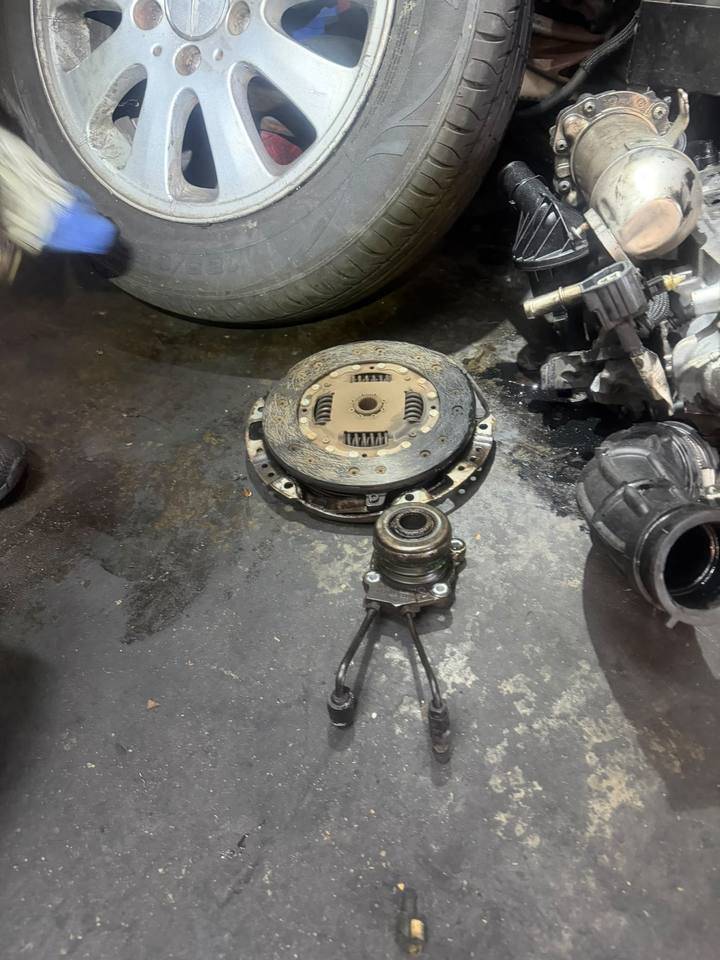
By far the most common cause. The clutch plate's friction material gets thinner with every gear change until there isn't enough left to grip. Most clutches last somewhere between 60,000 and 100,000 miles, and stop-start London traffic wears them out faster.
- 02
Oil on the clutch
A leaking seal at the back of the engine or the front of the gearbox can let oil onto the clutch plate. Even a plate with plenty of life left will slip once it's contaminated. The leak has to be fixed at the same time, or the new clutch will go the same way.
- 03
A tired pressure plate
The pressure plate's springs lose strength over the years, so they can't clamp the clutch plate as hard. That's one reason the clutch plate and pressure plate are always replaced together.
- 04
Hydraulics or cable
If the clutch hydraulics or cable don't let the clutch fully engage, it can slip even with a good plate. A sticking slave cylinder or a badly adjusted cable are the usual culprits.
- 05
A glazed flywheel
If the face of the flywheel is glazed or scored from heat, the clutch can't grip it properly.
- 06
How the car is driven
Resting a foot on the pedal, holding the car on a hill with the clutch instead of the handbrake, towing, and lots of hard pull-aways all wear a clutch faster. An engine tuned for more power can also be too much for a standard clutch.
05Is it the clutch, or something else?
A few other faults can feel a lot like clutch slip. Here's how they usually differ.
| What you notice | What it usually means | Read more |
|---|---|---|
| The revs rise but the car doesn't speed up | A slipping clutch | Clutch replacement |
| A heavy, spongy or sticking pedal | The clutch hydraulics or release mechanism | Clutch replacement |
| Crunching into one particular gear | Worn synchromesh inside the gearbox | Gearbox repairs |
| A rattle at idle, or a knock when you switch off | Often a worn dual-mass flywheel | Dual-mass flywheel |
| An automatic that flares its revs between gears | Usually an automatic or DSG gearbox fault | Gearbox repairs |
| Loss of power with a warning light on | An engine or sensor fault, often limp mode | Car diagnostics |
06Can you keep driving with a slipping clutch?
For a short while, carefully, yes. But a slipping clutch never gets better on its own. The longer it slips, the more heat goes into the flywheel, and that can turn a clutch job into a clutch and flywheel job. In the end it can slip so badly that the car won't move at all, often at the worst moment, such as pulling out of a junction.
Until it's fixed
- Drive gently and change up early
- Use the handbrake on hills, not the clutch
- Keep your foot off the pedal between gear changes
- Get it booked in sooner rather than later
Avoid
- Towing or carrying heavy loads
- Overtaking, or joining fast roads that need full power
- Hard pull-aways from junctions
- Long trips a long way from home
If the car won't move or won't go into gear, don't keep trying. Call us and we'll arrange recovery.
07What fixing it involves
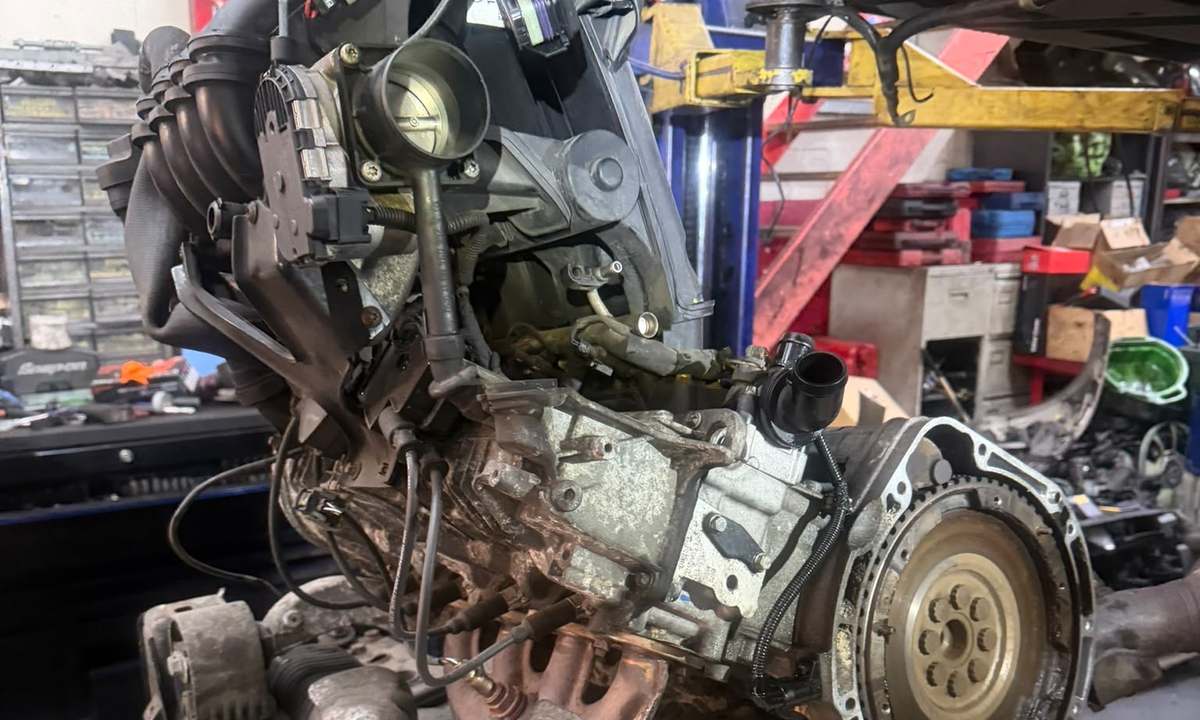
A slipping clutch is fixed by replacing it. The gearbox has to come off to reach the clutch, so the clutch plate, pressure plate and release bearing are replaced together as a kit. That way you never pay for the gearbox to come off twice.
While it's apart, the flywheel is checked. If it needs replacing, we call you before going any further. Most cars take a day.
For many front-wheel drive manual cars, our mobile mechanic can do the whole job on your driveway. 4x4s, many rear-wheel drive cars and automatics go to a workshop we trust, and we collect the car and bring it back. Read more about our clutch replacement service in London.
08What affects the cost
There's no single price, because the job varies so much from car to car. These are the main things that change it.
- 01Your carFront-wheel drive hatchbacks are the simplest. Rear-wheel drive cars, 4x4s and bigger engines take more labour.
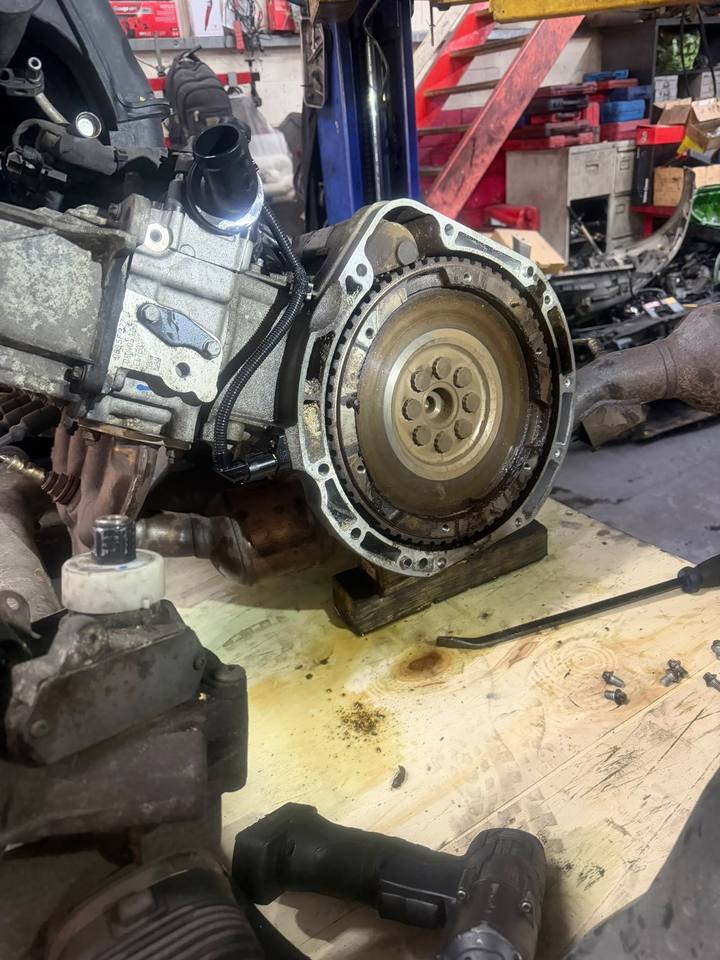
- 02The flywheelA dual-mass flywheel can cost as much as the clutch kit. We'll tell you up front if your car has one.
- 03The partsWe'll explain the difference between brands and recommend what suits your car.
- 04The hydraulicsWhether the slave or master cylinder needs doing at the same time.
- 05Where it's doneOn your driveway, or collected and returned.
Send us your registration and we'll give you the full price, parts and labour, before anything is booked.
09Questions drivers ask us
Can a slipping clutch fix itself?
No. Once the friction material has worn down or been soaked in oil, it can't recover. Driving gently slows the wear, but the clutch will still need replacing.
How long can I drive with a slipping clutch?
There's no safe number of miles. Some clutches slip on and off for weeks, others give up within days. If it's slipping in normal driving, not just when you put your foot down, get it looked at as soon as you can.
Will a slipping clutch fail an MOT?
The MOT doesn't test how well the clutch works, so it usually won't fail on that alone. It still needs fixing, because a clutch that gives up can leave you stranded.
Can you replace just the clutch plate?
It's possible, but rarely worth it. Most of the cost is the labour of taking the gearbox off, so the clutch plate, pressure plate and release bearing are replaced together as a kit.
Can an automatic car have a slipping clutch?
Yes. Many automatic and DSG gearboxes have clutches inside, and they can slip too. Those faults need a specialist diagnosis, which we arrange through gearbox specialists we trust.